Reflections on Peter Hicks’ Historical Survey – Exploring personhood through a Christian philosophical lens.
In a world constantly reshaping its understanding of what it means to be human, Peter Hicks offers us something rare: a patient, humble, and balanced walk through history. In his essay “One or Two? A Historical Survey of an Aspect of Personhood,” Hicks explores how the concept of personhood has shifted over the last two and a half millennia. The piece is not only scholarly but quietly pastoral, inviting us not just to look back, but to think more clearly about who we are today.
Peter Hicks, a Christian philosopher and former Lecturer in Philosophy at the London Bible College (now London School of Theology), doesn’t aim to dazzle with a dramatic thesis. Instead, he reflects on the evolution of personhood through key thinkers from the Pre-socratics and Buddha, through Plato and Aristotle, to Aquinas, Descartes, Hume, Kant, and beyond.
At the heart of his article is the theme of dualism, the idea that the human person might consist of two distinct elements, often soul and body, or mind and body. Hicks charts how this idea appears, disappears, and transforms across time:
- The Presocratics and Buddha both rejected the idea of a distinct soul or permanent self. They saw humans as deeply embedded in the world, a collection of changing events, not enduring substances.
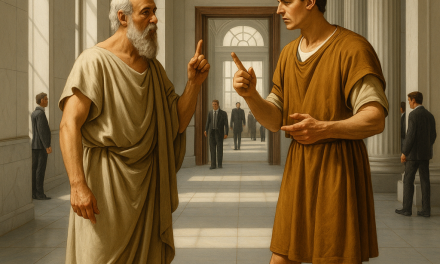
- Plato, in contrast, introduced a sharp dualism between the eternal soul and the transient body. His view elevated the soul as the true self and the body as a source of corruption and limitation.
- Aristotle rejected this: the soul, he argued, was the life-principle of the body, not a separate entity, but an integral part of being human. This view emphasized unity.
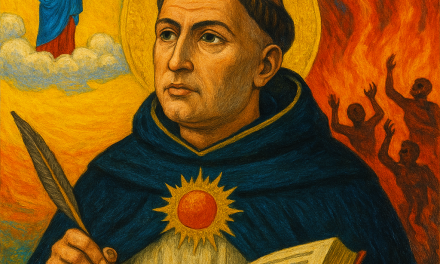
- Aquinas built on Aristotle with Christian theology. He taught that body and soul form a single human substance, though he retained belief in the soul’s persistence beyond death and its eventual reunion with a resurrected body.
- Descartes reignited dualism in the Enlightenment era, separating the thinking mind (res cogitans) from the extended body (res extensa).
- Critics like Hume reduced the self to a bundle of perceptions, and Kant complicated things by introducing a dualism between the phenomenal (what we can perceive) and the noumenal (true reality, beyond our grasp).
By the time Hicks reaches the 20th century, he highlights how psychology fractured our view of the person into ever smaller parts: rational, emotional, unconscious, social, volitional. Yet in more recent years, he sees a hopeful move toward integration. Holistic approaches like Gestalt psychology or Neuro-Linguistic Programming aim to bring these fragmented parts back into a unified understanding of personhood.
Hicks doesn’t argue for a single answer, but his sympathies are clear. He affirms the complexity of human beings while resisting both cold materialism and rigid dualism. His Christian worldview surfaces gently throughout the text. He speaks positively of Aquinas’ view of unified personhood and hints that modern attempts to integrate emotion, reason, spirituality, and physicality are moving in the right direction. He concludes by welcoming this turn toward wholeness:
“This willingness to accept the incredible complexity of the human person is a very welcome corrective to the reductionism of the last few centuries.”
Hicks’ approach is one of quiet authority and generosity. He avoids dogmatism and instead offers a long view of our intellectual heritage, helping readers see that debates over what it means to be human have always been with us, and likely always will. In doing so, he reminds us that the question “Who am I?” isn’t just philosophical, it’s deeply personal, and profoundly theological.
Credit: This blog post is based on Peter Hicks’ article “One or Two? A Historical Survey of an Aspect of Personhood,” published in Evangelical Quarterly. Used here with appreciation for his thoughtful and generous contribution to Christian philosophy. The full article can be access via Brill, but unfortunately a subscription is required to read it.