Socrates, Euthyphro, and the Power of Questioning What We Believe
Picture the scene. The dust of Athens clings to your sandals as you make your way toward the courthouse. Crowds murmur, rumours swirl, and the air feels heavy with judgement. In the middle of it all, a man named Euthyphro strides with confidence. He is on his way to prosecute his own father. His father killed a man who had killed one of Euthyphro’s slaves. Most people would have called the case tragic but settled. Not Euthyphro. He was determined that justice had to be done, even if it meant dragging his father into court.
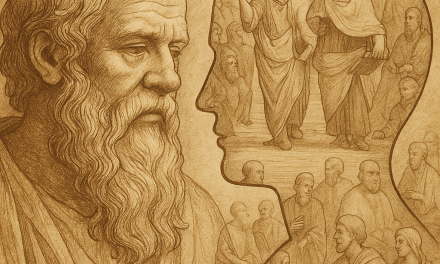
At the courthouse steps he meets Socrates. The old philosopher is also facing trial, accused of corrupting the youth. Instead of rushing to defend himself, Socrates turns his attention to this young man and asks, “Why?” Why prosecute your own father? Why are you so sure this is the right thing to do?
The Question of Piety
Euthyphro believes that to prosecute his father is an act of piety, something pleasing to the gods. But Socrates is not satisfied. He asks, “Which gods?” The gods of Greece are notorious for disagreeing. If one god is pleased, another may be offended. How can an action be both pious and impious at the same time? The more Socrates questions, the more uncertain Euthyphro becomes. He thought he was doing the right thing. He thought his actions were clear and righteous but Socrates questioning challenges Euthyphro’s assumptions.
Why This Ancient Story Still Echoes
I find this story fascinating because it is not just about a father and a son. It is about us. How often do we assume we are right without ever asking the deeper questions? How often do we go along with the crowd, convinced that what everyone else believes must be true? Socrates’ questions echo down the centuries:
Why do you believe what you believe? Who told you this was right? Have you ever stopped to examine it?
The Spiritual Danger of Unquestioned Beliefs
For me, this is not only an intellectual challenge but a spiritual one. The Bible warns us that “the devil comes to steal, kill and destroy” (John 10:10). Lies rarely look like lies. They are dressed up as truth. They sound persuasive, they stir up strong emotions, and they can even feel righteous. That is the real danger. We can be poisoned by hate but believe it is justice. We can be swept along by anger and convince ourselves it is holy zeal. But hatred does not produce the righteousness of God.
Jesus’ Call to Love
Is there such a thing as righteous hate? Jesus did not think so. He told us to love our enemies, to pray for those who persecute us, and to forgive as we have been forgiven. That is a radical call, and it cuts against every instinct we might have to lash out or justify revenge. What looks like piety in the moment may in fact be rebellion against the very God we claim to serve.
Living With Eyes Wide Open
That is why I believe the story of Socrates and Euthyphro still matters. It calls us to live with eyes wide open. It urges us to test our motives, to question the voices we listen to, and to weigh everything against the truth of God’s Word. The Christian life is not blind following. It is not simply agreeing with the loudest voice or the strongest emotion. It is about living examined lives — rooted in truth, guided by love, and anchored in Christ.
Socrates left Euthyphro unsettled and uncertain, yet it was a good kind of unsettling. Perhaps we need that same experience today. The best thing we can do is pause, question, and think deeply before God, asking whether what we call righteousness is truly aligned with His truth. Too often we interpret being challenged as being attacked. But why? Why are we so quick to take offence when someone asks a hard question? In our culture, even honest questioning is sometimes labelled as hate speech. The problem is a failure to recognise that questions are not hateful. They may stir our emotions, expose our assumptions, and make us uncomfortable, but that is not hatred. At its best, questioning is an act of love, a desire to set us free from false narratives and the grip of hate.
And that is exactly what Christ calls us into. He does not invite us to cling to our pride or protect our comfort. He calls us to walk in truth, even when it unsettles us, because only the truth has the power to set us free. To welcome the challenge of truth is not weakness; it is the beginning of wisdom, and the path that leads us closer to the heart of God.