We live in a world obsessed with climbing. We climb career ladders, social ladders, and ladders of influence. The prevailing wisdom is to assert your rights, build your brand, and never let anyone see you take a step down. We are taught to grasp, to achieve, to accumulate. Into this striving, anxious world, the Apostle Paul speaks a completely alien word. He points to a different kind of life, a different definition of greatness, found not in ascent but in a shocking, willing descent.
In a few short verses in his letter to the Philippians, Paul unveils the very engine of the Christian faith. He shows us Jesus Christ, not clinging to the highest place in the universe, but willingly emptying Himself to take the lowest. This is more than a beautiful poem or a difficult theological concept. This is the pattern for our lives. Understanding Christ’s journey from the glory of heaven to the shame of a Roman cross is the key to unlocking a life of genuine unity, purpose, and joy. It reorients our entire understanding of what power and love truly look like.
From Divine Form to Servant’s Frame
Paul’s letter arrives in Philippi, a city swelling with Roman pride. In a Roman colony, its citizens enjoyed special privileges and looked down on others. Status was everything. So when Paul urges the believers there to have unity and to “in humility value others above yourselves” (Philippians 2:3), he is cutting directly against the grain of their culture. To give his command weight, he doesn’t offer a list of rules but presents a breathtaking portrait of the one they follow. He gives them the mind of Christ.
He begins at the pinnacle of reality: Jesus, “being in very nature God” (Philippians 2:6). The Greek here for “nature” is *morphē*, signifying the essential, unchangeable reality of a thing. Paul is unequivocal: Jesus is, and always has been, fully God. Yet He “did not consider equality with God something to be used to his own advantage.” The original language suggests something to be clutched or exploited. Think of a prize won in battle, held up for all to see. Jesus’ divine status was not a weapon to be wielded or a privilege to be hoarded. His posture was not one of grasping, but of giving.
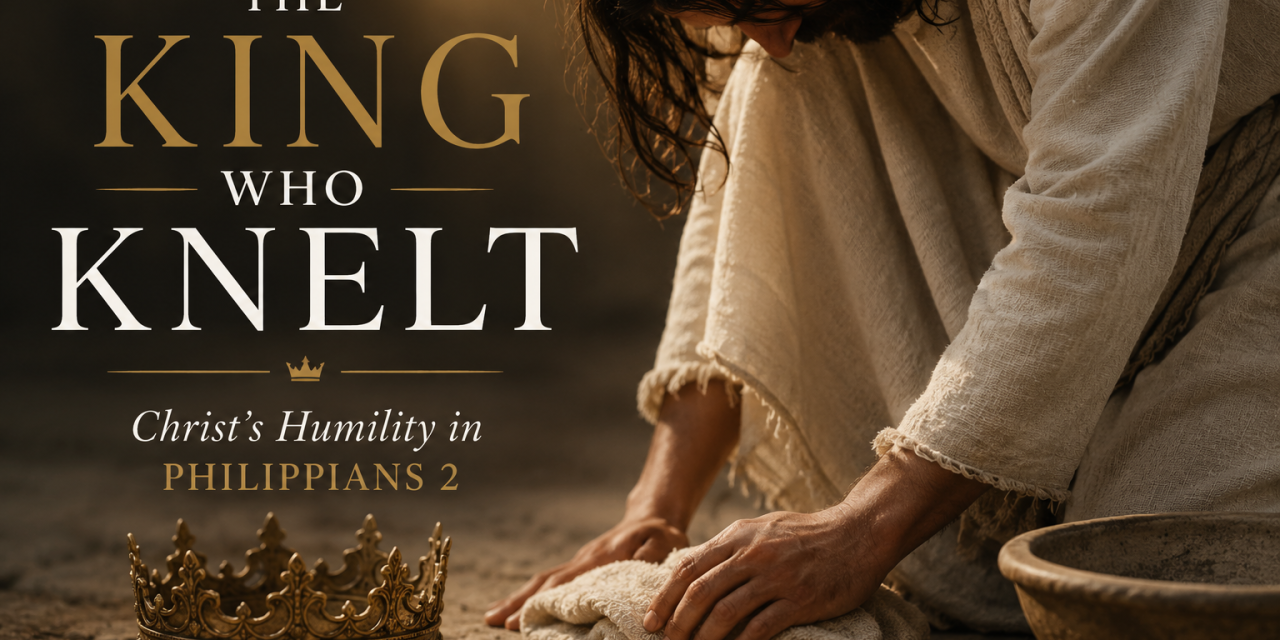
What followed was a voluntary act of cosmic humility. He “made himself nothing” (Philippians 2:7). The Greek verb is *ekenōsen*, from which we derive the theological term *kenosis*, meaning “he emptied himself.” This does not mean He became less God. That is impossible. Rather, He poured out the privileges of His divine status. He veiled His glory and laid aside His rights, taking on the very *morphē*, the essential nature of a servant. He became truly human.
The descent did not stop there. His humility had a destination. He committed to a life of perfect obedience to the Father, an obedience that led Him all the way to death. And Paul adds a stunning, final detail for his Roman audience: “even death on a cross” (Philippians 2:8). This was not a noble end. It was the most degrading, cursed form of execution, reserved for slaves and rebels. For the Son of God to submit to this was the ultimate inversion of power and status, a scandal that revealed the very heart of God.
“The Son of God did not see equality with God as a prize to be clutched, but as a position to be relinquished for our sake.”
The Great Reversal of Adam’s Grasp
The hymn reveals the very character of God. Our human instinct is to imagine God as a being who jealously guards His power. But Philippians 2 shows us a God whose nature is self-giving love. The humility of Christ is not a temporary disguise He puts on; it is an expression of who God eternally is. The Father, Son, and Spirit exist in an eternal community of mutual love and deference. In Jesus, we see that divine life turned outward for the salvation of the world. God’s glory is not found in a clenched fist, but in an open hand.
This act of divine self-giving stands in stark contrast to humanity’s first act of self-aggrandisement. In the Garden of Eden, Adam and Eve were tempted with the promise, “you will be like God” (Genesis 3:5). Created in God’s image, they were not content with their position but grasped for equality. Their prideful reach led to sin, alienation, and death for all humanity. The story of the Bible pivots on the magnificent reversal we see in Christ. The first Adam, a man, grasped at being God and brought death. The last Adam, who was God, emptied Himself to become a man and brought life (1 Corinthians 15:45).
Christ’s path redefines the story of salvation. God did not redeem the world through an overwhelming display of coercive force, which would have only confirmed our worst fears about power. Instead, He saved us through an incomprehensible act of vulnerability. He entered our brokenness, lived under the curse of the law He wrote, and submitted to the death penalty we deserved. The cross, which looked like the ultimate defeat, was in fact the ultimate victory. It was there that sin was condemned and love triumphed, not by crushing its enemies, but by dying for them.
The Cruciform Mind in a World of Crowns
The beautiful hymn of Philippians 2 stands as one of the New Testament’s most complete declarations of who Jesus is. It charts His entire redemptive work, from His eternal pre-existence with the Father, through His humble incarnation and obedient death, to His glorious resurrection and final exaltation where “every knee should bow” (Philippians 2:10). Jesus perfectly fulfills the portrait of the Suffering Servant in Isaiah, who was wounded for our transgressions and crushed for our iniquities, yet through his suffering would justify many (Isaiah 53:5, 11). He is the King who establishes His kingdom not through conquest, but through sacrifice.
This pattern of Christ’s self-emptying becomes the foundational ethic for the Christian life. The apostles consistently point believers back to this model. When writing to Christians facing persecution, Peter encourages them to follow in Christ’s steps, who when reviled, did not revile in return, but entrusted Himself to God (1 Peter 2:23). John makes it the very definition of Christian community: “By this we know love, that he laid down his life for us, and we ought to lay down our lives for the brothers” (1 John 3:16). The cross is not just the event that saves us; it is the pattern that shapes us.
To live as a Christian today, then, is to cultivate the “same mindset as Christ Jesus” (Philippians 2:5). This is a radical call to live a cruciform, or cross-shaped, life in a world that worships crowns. It means that in our families, our workplaces, and our churches, our goal is not to win, to be right, or to protect our reputation. Our goal is to consider others better than ourselves. It means we measure our strength not by how many people serve us, but by how many people we serve. It is a life oriented not around our own advantage, but around the good of others, all for the glory of God.
“Christ’s descent from glory to the cross is not just a historical event; it is the very grammar of God’s love written for us to learn.”
Living This Out
Living this out feels impossible, doesn’t it? Every fiber of our being, encouraged by the world around us, screams for self-preservation and self-promotion. The call to empty ourselves sounds like a recipe for being taken advantage of, for losing. But the gospel frees us from this fear. The call to humility is not a call to self-hatred or to becoming a doormat. It is a call to a joyful self-forgetfulness that is only possible because we are already full in Christ.
Because Jesus emptied Himself for us, we have been filled with every spiritual blessing (Ephesians 1:3). Because He descended to the cross, we have been raised with Him and seated in the heavenly realms (Ephesians 2:6). Our status is secure. Our value is settled. We have nothing left to prove. This truth liberates us from the exhausting work of building our own little kingdoms. We are free to stop grasping for our own glory and instead point to His. We can take the lower seat, absorb an offence, or celebrate another’s success without feeling threatened, because our identity is not in what we achieve, but in what Christ has achieved for us.
This mindset changes everything. In a disagreement, it prioritises understanding over winning the argument. In the church, it looks for the quiet, unglamorous needs and meets them without needing applause. In our community, it means using whatever power or privilege we have not for our own comfort, but for the flourishing of others. This is the beautiful, upside-down life of the kingdom, a life made possible not by our own strength, but by the Spirit of the one who gave everything for us.
the glory of christ's humility
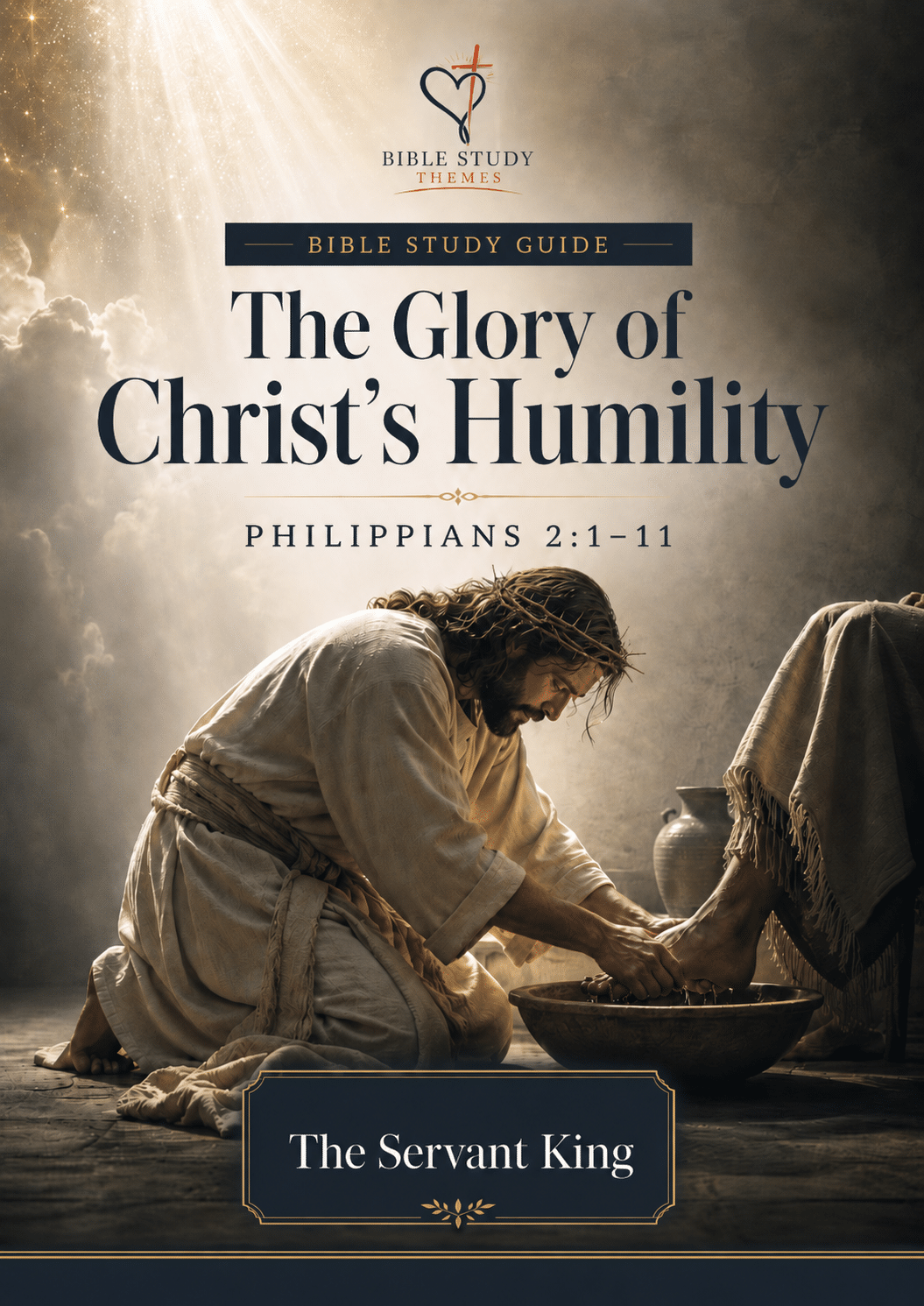
This reflection is based on my fuller Bible study guide on Philippians 2, The Servant King: The Glory of Christ’s Humility. If you’d like to explore the passage in more depth, you can view the full study guide at Bible Study Themes.
The Servant King: The Glory of Christ’s Humility
Go Deeper with the Philippians 2 Study Guide
What kind of King chooses the lowest place?
The Glory of Christ’s Humility is a focused study of Philippians 2:1–11, exploring how Jesus is revealed as both truly divine and truly human. Following the movement from divine glory to humble servanthood, from the cross to exaltation, this guide helps readers see why Christ’s humility is central to Christian worship, discipleship, and life together.